
For decades, conventional medicine has treated the mind and the body as separate entities, managing physical symptoms in isolation. However, modern scientific research proves what ancient traditions have always known: our thoughts, emotions, and physical biology are inextricably linked.
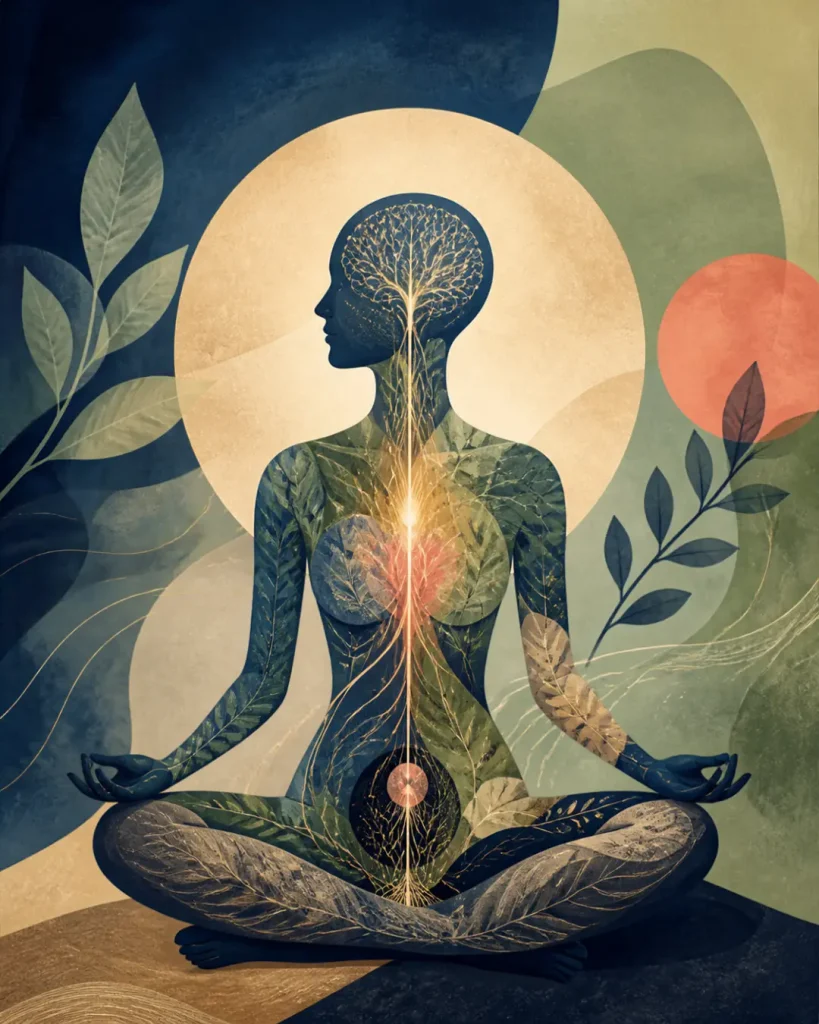
Psychosomatic Medicine – today better known as PNEI (Psycho-Neuro-Endocrine-Immunology) – is the study of how your psychological state directly communicates with your nervous system, your hormones, and your immune defenses. We do not treat a fragmented diagnosis; we treat the whole, living system.
For example, chronic emotional stress has been linked to increased inflammatory markers and impaired immune responses, while positive psychological states can enhance immune surveillance and hormonal regulation. PNEI thus provides a rigorous framework for understanding how mental and emotional processes translate into physiological changes, underscoring the need for comprehensive treatment strategies that address both psychological and biological factors in health and disease.
How Emotional Stress Becomes Physical Illness
When we experience prolonged anxiety, chronic stress, or deep-seated emotional wounds, our internal chemistry changes. Emotional states alter neurotransmitter and hormone signaling, which can in turn suppress or over-activate the immune system.
In my practice, I frequently witness how hidden, often repressed emotional content—such as unresolved anger, guilt, shame, or grief—reemerges at the biological level. When emotional energy has nowhere to go, it manifests physically. This biological translation is often the underlying driver behind chronic conditions that conventional medicine struggles to explain, including:
- CHRONIC FATIGUE SYNDROME (CFS) AND FIBROMYALGIA
- PERSISTENT MUSCLE TENSION AND CHRONIC PAIN
- NERVOUS SYSTEM DYSREGULATION AND BURNOUT
- GASTROINTESTINAL DISTRESS AND IMMUNE IMBALANCES
- HORMONAL ISSUES AND MENSTRUAL IRREGULARITIES
The Past & the Present of Psychosomatic Medicine
As early as the 19th century, physicians like Pierre Janet and Sigmund Freud began exploring how psychological distress could manifest as physical symptoms. This perspective soon challenged Western medicine’s separation of mind and body. Freud’s work on conversion disorders and Janet’s studies on dissociation laid the groundwork for understanding how unresolved emotional conflicts might be “converted” into bodily complaints. Later, Franz Alexander, a pioneer of psychosomatic medicine in the mid-20th century, emphasized that many common illnesses—such as ulcers, hypertension, and asthma—could be influenced by emotional and psychological factors. His research helped establish the field’s legitimacy and inspired a new generation of mind-body research.
Today, psychosomatic medicine continues to evolve, drawing from neuroscience, trauma studies, and holistic approaches. Latest PNEI research has further illuminated the intricate links between chronic stress, emotional trauma, and physical health. These studies suggest that symptoms such as chronic pain, headaches, digestive issues, and even autoimmune conditions can sometimes be traced back to unresolved emotional wounds or ongoing psychological stress. By recognizing and honoring these connections, psychosomatic medicine invites us to approach healing with respect for the complex interplay between our inner and outer worlds.
Findings from scientists like Candace Pert and Antonio Damasio show that emotions are not just abstract experiences, but deeply embodied—affecting immune function, hormonal balance, and even gene expression. Studies using brain imaging and heart rate variability have revealed how chronic stress or unprocessed trauma can disrupt the body’s regulatory systems, contributing to inflammation and a range of chronic illnesses. Moreover, contemporary trauma researchers emphasize the importance of therapies that integrate body awareness, movement, and mindfulness, showing that healing must often involve both mind and body for true, lasting change. This growing body of evidence reinforces the wisdom of psychosomatic medicine: our thoughts, emotions, and physical health are inseparably linked, and addressing one means caring for the whole.
Take the Next Step toward Wholeness
You do not have to settle for just managing chronic symptoms or living with unexplained pain. Whether online or in person, I invite you to step into a safe, collaborative space where we treat the wound, not just the disorder.
✓ Let’s connect
Are you more interested in learning?
Get trained in Psychosomatic Medicine. Online or in person.